
IMPORTANT SAFETY NOTICE: This article is an informational bulletin only. It is not a repair instruction, guide, or directive, and nothing here tells you to perform any work. Any action you choose to take is entirely at your own risk. Smooth Appliance Services LLC assumes no liability for personal injury, death, or property damage resulting from actions taken by the reader. For any repair or safety concern, contact a licensed professional technician.
Table of Contents
- Why Dryer Maintenance Matters for Fire Safety
- Understanding How Lint Builds Up Inside Your Dryer
- The Lint Trap: Your First Line of Defense
- The Exhaust Vent System: Signs of Blockage
- Internal Components: Symptoms of Wear and Damage
- Establishing a Routine Maintenance Schedule
Dryer Maintenance is a critical aspect of home safety that many homeowners overlook until it’s too late. Lint accumulation, worn components, and improper venting can turn your laundry routine into a fire hazard. Since 2017, Smooth Appliance Services has helped Portland-area families keep their dryers operating safely and efficiently. This article outlines the symptoms to watch for and when to call a professional.
Why Dryer Maintenance Matters for Fire Safety
Proper dryer care directly impacts household safety by mitigating the risk of fires caused by lint buildup and component failures. The National Fire Protection Association estimates that neglecting dryer care leads to thousands of residential fires annually, many of which could be prevented with regular professional servicing. Optimal airflow reduces strain on mechanical parts and extends appliance life. Ignoring maintenance not only endangers lives but also results in costly repairs or replacements after a fire incident. By prioritizing professional maintenance, you protect your family and home from preventable disasters.
Understanding How Lint Builds Up Inside Your Dryer
Lint originates from fabric fibers shed during washing and drying, accumulating primarily in the lint trap but also throughout internal passages over time. This flammable material coats drum surfaces, blower wheels, and exhaust pathways, restricting airflow and causing overheating. Poor ventilation exacerbates the issue, as trapped lint cannot escape through the exhaust system, creating a tinderbox environment. Understanding this process highlights why professional cleaning is non-negotiable for fire prevention. Addressing lint buildup requires specialized tools and access to internal components that only certified technicians should handle.
The Lint Trap: Your First Line of Defense
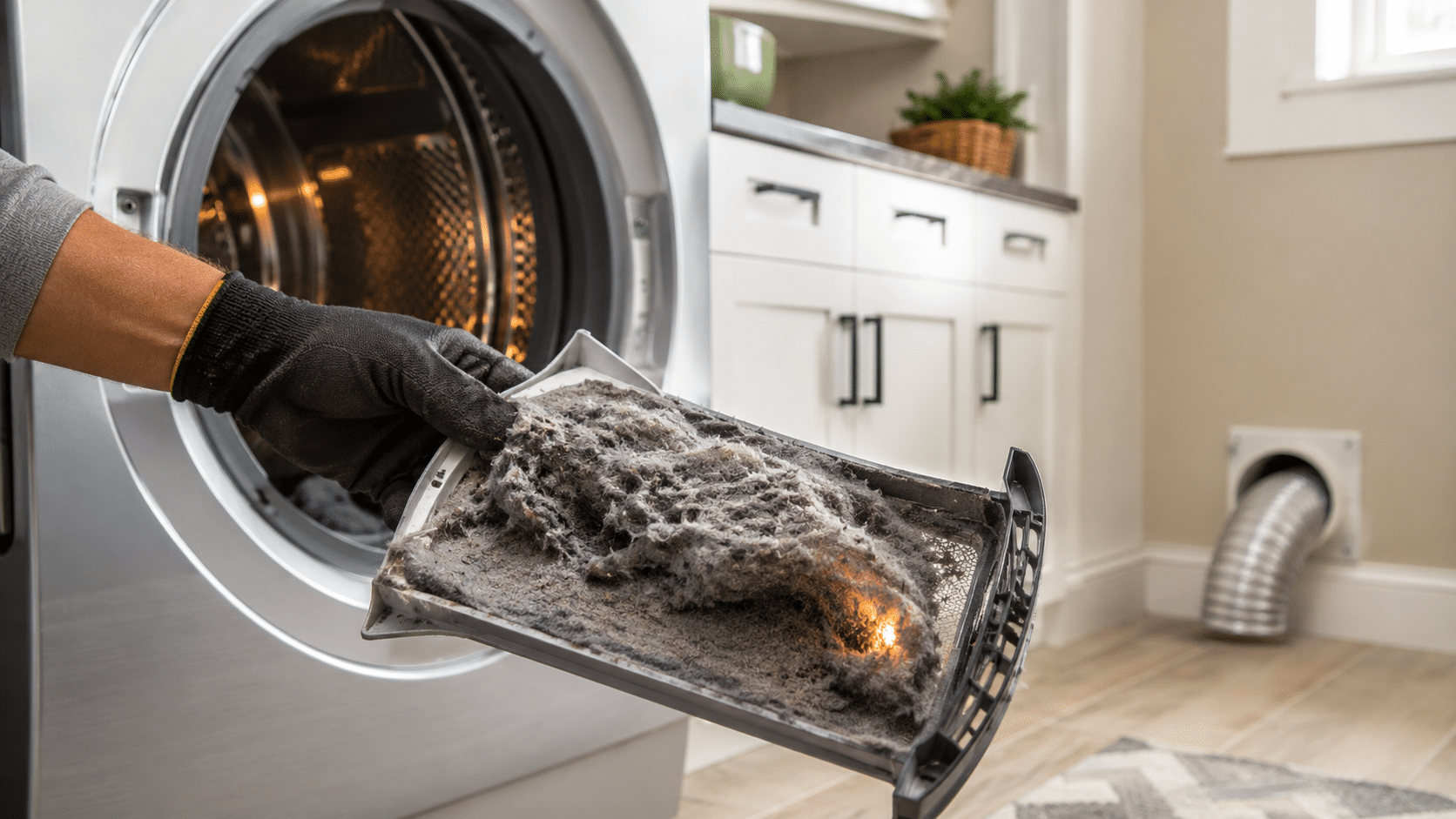
The lint trap catches most fabric fibers before they enter the dryer’s internal passages, but it cannot capture everything. A clogged lint trap causes longer drying times, excessive heat, and increased energy consumption. Symptoms of a problem include clothes that remain damp after a full cycle, the dryer exterior feeling unusually hot, or a musty smell during operation. While you should clean the lint trap after every load, deeper cleaning of the trap housing and internal pathways requires professional equipment. If you notice these symptoms despite regular lint trap cleaning, contact a technician for thorough inspection.
The Exhaust Vent System: Signs of Blockage
The exhaust vent channel removes moist air and lint particles from the dryer to the exterior; blockages here are a leading cause of overheating and fires. External symptoms of vent blockage include clothes taking multiple cycles to dry, the laundry room becoming excessively humid, or a burning smell during operation. You may also notice lint accumulating around the exterior vent opening or hear unusual noises from the dryer. These signs indicate restricted airflow requiring professional vent cleaning. Annual inspection by a qualified technician ensures thorough cleaning and identifies hidden issues before they become hazards.
Internal Components: Symptoms of Wear and Damage
Internal components like belts, drums, rollers, and bearings experience significant stress during operation and wear over time. External symptoms of component failure include unusual noises such as squeaking, grinding, or thumping during cycles, the drum not turning properly, or the dryer stopping mid-cycle. These signs indicate mechanical degradation that could lead to catastrophic failure or fire if ignored. Always unplug the dryer if you notice these symptoms and contact a licensed technician immediately. Attempting to inspect or repair internal components yourself risks injury, voided warranties, and incomplete repairs. Schedule annual check-ups with professional appliance repair services to catch problems before they escalate.
Establishing a Routine Maintenance Schedule
Create a maintenance calendar that includes post-load lint trap cleaning, quarterly visual inspections of the exterior vent, and annual professional servicing to stay proactive. Mark these tasks on a digital or paper planner, setting reminders to ensure consistency even during busy periods. Document any irregularities or repairs to track patterns and anticipate future needs, enhancing long-term reliability. Consistent professional maintenance not only prevents fires but also improves energy efficiency and reduces utility costs. Committing to a schedule transforms safety from an afterthought into a habitual practice.
Adhering to these dryer maintenance practices significantly lowers the risk of dryer-related fires while extending appliance lifespan. For detailed safety guidelines, consult resources from the U.S. Consumer Product Safety Commission. When you notice warning signs or need professional servicing, contact Smooth Appliance Services LLC at (971) 236-2052. We serve Portland, Salem, and surrounding Oregon communities with certified, insured technicians, same-day service, and a free service call with repair.
