
IMPORTANT SAFETY NOTICE: This article is an informational bulletin only. It is not a repair instruction, guide, or directive, and nothing here tells you to perform any work. Any action you choose to take is entirely at your own risk. Smooth Appliance Services LLC assumes no liability for personal injury, death, or property damage resulting from actions taken by the reader. For any repair or safety concern, contact a licensed professional technician.
When you notice your Freezer not freezing, recognizing the warning signs early can save your food and prevent costly damage.
Table of Contents
- Temperature Settings: Signs of Misconfiguration
- Door Seals: Symptoms of Failure
- Airflow Issues: External Warning Signs
- Overloading: What to Watch For
- Compressor Behavior: Audible Indicators
Freezer not freezing is a common but urgent issue that disrupts food safety and household routine. When your freezer fails to maintain safe storage temperatures (typically 0°F or lower), perishable items risk spoilage, and long-term frozen goods may suffer quality degradation. Since 2017, Smooth Appliance Services has helped Portland-area families diagnose and resolve freezer problems safely. This article outlines the symptoms to watch for and when to call a professional.
Temperature Settings: Signs of Misconfiguration
Modern freezers feature digital controls or mechanical dials that can be bumped or misconfigured during cleaning or rearranging. External symptoms of temperature setting issues include the display showing an error code, blank screen, or temperature reading significantly higher than 0°F.
You may also notice the unit running constantly without reaching target temperature, or cycling on and off erratically. A sudden shift in ambient room temperature (such as during summer heatwaves) can cause the thermostat to misread conditions.
If the control panel appears functional but cooling remains inadequate, the issue may involve internal sensors or the control board itself—components requiring professional diagnosis. Attempting to reset or reprogram these systems without proper training risks further damage to the appliance.
Door Seals: Symptoms of Failure
Door seals (gaskets) are rubberized strips that create an airtight barrier when the door closes. Even minor warping, cracking, or debris buildup allows cold air to escape and warm, humid air to enter.
External symptoms of seal failure include frost accumulation around door edges, the compressor running continuously, visible cracks or tears in the rubber, or the door not closing fully. You may also notice higher electricity bills as the unit works overtime to maintain temperature.
Persistent gaps, especially near corners or hinges, suggest physical distortion or aging material. While gasket replacement may seem straightforward, improper installation risks further inefficiency and voided warranties. Professional freezer repair ensures proper sealing and long-term reliability.
Airflow Issues: External Warning Signs
Most upright and chest freezers rely on rear or bottom-mounted condenser coils that dissipate heat into surrounding space. When airflow is restricted, the unit cannot release heat effectively, causing overheating and cooling failure.
External symptoms of airflow problems include the exterior feeling unusually warm, the compressor running constantly, or frost buildup inside the freezer despite proper loading. You may also notice the unit struggling more in hot weather or when placed in a warm garage.
Allowing proper clearance (at least 3 inches behind and above freestanding units) helps prevent these issues, but cleaning condenser coils requires specialized tools and access to areas homeowners should not attempt to reach. If you notice these symptoms, contact a qualified technician for thorough inspection.
Overloading: What to Watch For
Cold air must circulate freely from the evaporator (usually located at the rear or top of the compartment) to all storage zones. Overpacking shelves, stacking containers tightly against the rear wall, or covering air vents with frozen bags restricts this movement.
External symptoms of overloading include uneven freezing (some items solid while others remain soft), frost accumulating in specific areas, or the freezer struggling to reach target temperature after adding large quantities of warm food.
Redistributing contents to leave 1–2 inches of space between packages and walls may help, but if frost buildup exceeds ¼ inch or cooling problems persist, the issue may involve the defrost system—requiring professional diagnosis and repair. Never use sharp tools or heat sources to manually defrost, as this damages interior liners and creates safety hazards.
Compressor Behavior: Audible Indicators
A healthy freezer cycles its compressor on and off roughly every 15-30 minutes, producing a low hum followed by quiet operation. Abnormal acoustic cues—or silence where sound should be—indicate potential system failure.
External symptoms of compressor problems include continuous humming, clicking, buzzing, or rattling sounds; the compressor running constantly without pausing; or complete silence (no audible cycling at all). These signs suggest relay, capacitor, motor, or refrigerant issues.
Neither constant running nor complete silence is safe for homeowner intervention. These conditions indicate electrical components, thermostat failure, or refrigerant loss—problems requiring specialized tools and training. Scheduling diagnostics with a licensed technician is the safest, most efficient next step.
Freezer not freezing demands prompt, methodical assessment, but never at the expense of safety. Each of these five symptom categories addresses common causes that homeowners can monitor externally. When you notice warning signs or need professional servicing, contact Smooth Appliance Services LLC at (971) 236-2052. We provide reliable refrigerator repair, freezer repair, and commercial freezer repair across Portland, Salem, and surrounding Oregon communities with certified, insured, and bonded technicians, same-day service, and a free service call with repair. For guidance on product hazards and recalls, consult the U.S. Consumer Product Safety Commission.
Image recommendation:
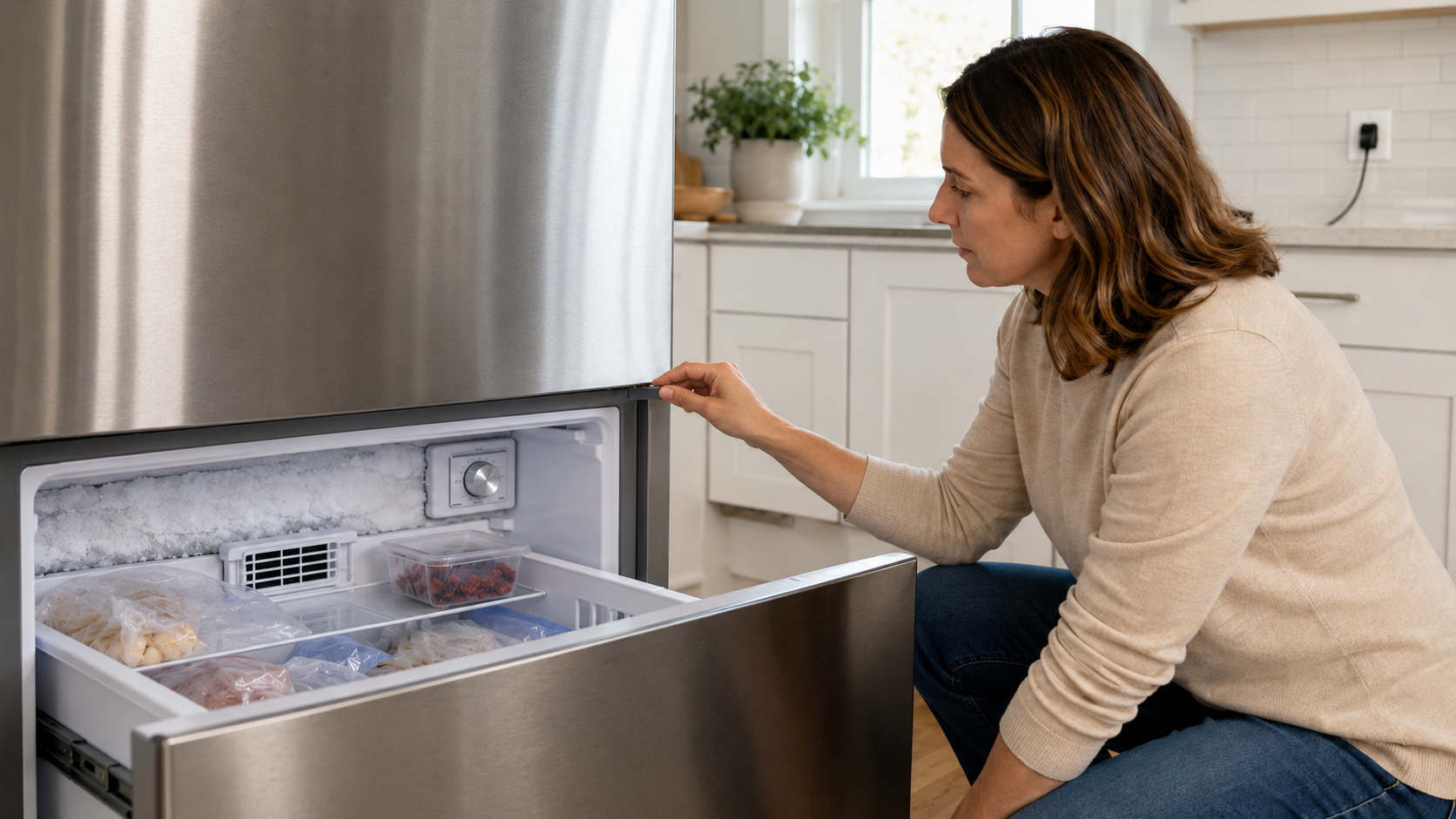
Use a photo of an open chest freezer in a Portland home. Alt text: “Freezer not freezing diagnostic checklist for food safety.”
